
The chances are you own one, need to upgrade or want to own one: the iconic iPhone is a must-have smartphone. Who hasn't heard of the gadget that revolutionised mobile phone technology? Millions tune in every year to watch the worlds "Best Marketing Manager" drop the hottest products in tech. With the rumour mill spinning about the release date for the latest and greatest model - the iPhone 8 - it's time to take a look at the history of the iPhone from idea stage to what it is now: one of the most popular devices on the planet. Like any good product, the iPhone has gone through numerous developmental stages, always building on the previous model, always promising greatness and always delivering.
Initial launch of the iPhone
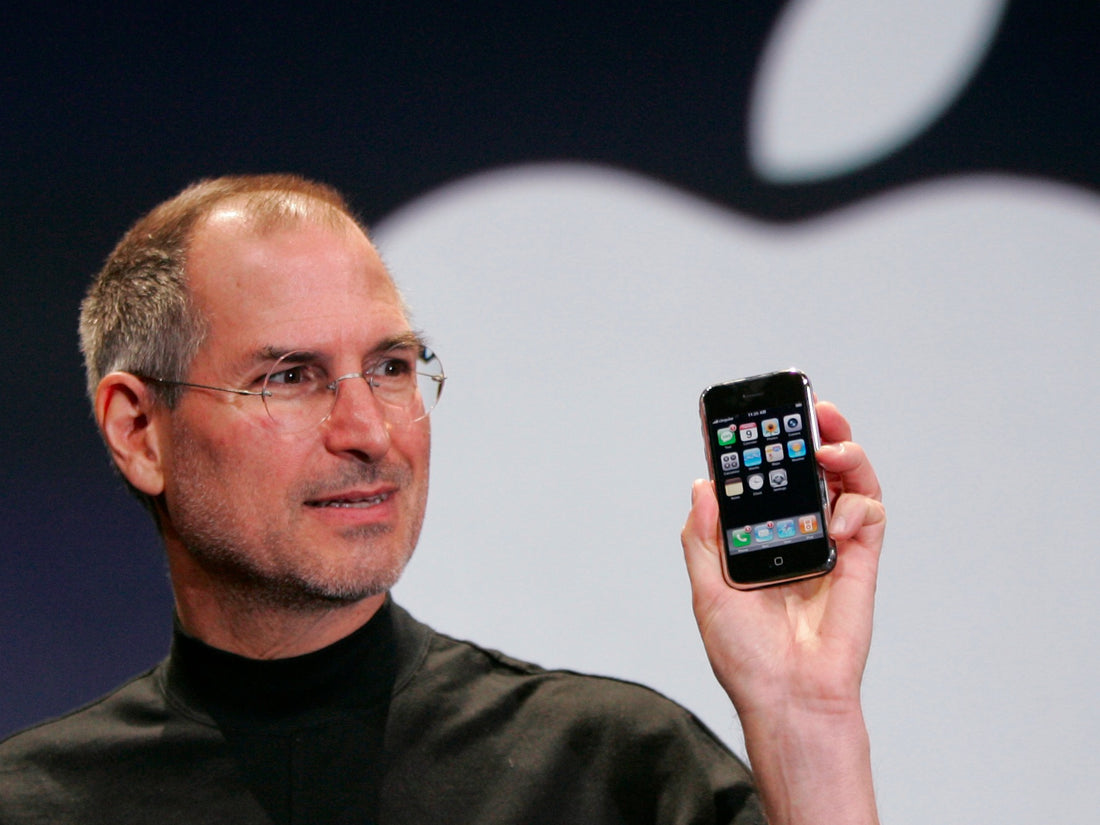
Ten years ago, in January 2007, Steve Jobs delivered what would became known as an iconic speech, during which he introduced a product to the world that would revolutionise mobile phone technology. Some of you may remember his famous words ‘three devices: one product.’ People were promised an iPod, a mobile phone and a computer device in one. It sounded too good to be true. What few people know, however, is that Jobs was taking a gamble on a product that back then was far from perfect. The speech and his prototype iPhone was nothing more than smoke and mirrors. When Jobs was holding his prototype iPhone on stage, anything could have happened. The technology was still in its infancy and those who had worked on the product were on the edge of their seats. But Jobs’ gamble paid off. The iPhone came to revolutionise mobile phone technology. Jobs' team who had been working on the iPhone had mapped out a list of things the phone could perform. If he deviated from the list, or did anything other than what was on the list, the entire phone may have malfunctioned in front of the watching world. But the mobile phone gods were on Jobs' side and everything worked... for now.
Original iPhone
The first iPhone was launched on 29th June 2007. The publicity leading up to the day ensured it turned into an event and not simply a sales day. People queued up for hours to get their hands on the new iPhone. Unfortunately, the price tag was a little prohibitive for a lot of consumers. While initial sales were certainly encouraging, they were not as high as Jobs and his team might have hoped for. In fact, looking back in time the iPhone had many critics. The touch screen technology was not embraced in the way Jobs believed it would be. One has to remember that, back then, the majority of smartphones had hardware keyboards and the mobile net was limited to WAP browsers. Of course, it was those entrenched in the smartphone technology who were most opposed to the iPhone technology, believing it would not gain a strong foothold in the mobile phone market. If only they had owned a crystal ball. Of course, the original iPhone would be discontinued 12 months after its initial release and replaced with a better model. By that stage, sales were reported to be in excess of six million units.
iPhone 3G
By the time the original iPhone was discontinued, Apple had identified some of the problems with it and was taking steps to rectify them. Some of the problems the team working on the iPhone identified included the 3G network, the fact that no independent applications were compatible with the new phone and that their new smartphone really needed to be a worldwide product. And then, of course, there was the question of the price tag. Technicians worked around the clock to fix the problems. 11th July 2008 marked the worldwide launch date for the iPhone 3G. According to Jobs, the download speed had improved significantly in this new model iPhone. He claimed that the iPhone 3G downloaded 34% faster than its competitors. The screen size stayed at the original 3.5 inch, as did the dock connector. Some of the pins were changed, which rendered some accessories incompatible and meant you could no longer charge your iPhone over FireWire. Apart from other technical changes, one thing that did change dramatically was the design. The new iPhone looked and felt vastly different. The original aluminium casing and plastic buttons had been replaced with a polycarbonate casing and metal buttons. An immediate benefit was improved reception. Another plus was the variety the new design brought to the smartphone market. With the front plate staying the same, the iPhone 3G offered the consumer the choice of a black or white backplate on their 16GB model. In addition, the entire phone was now rounded instead of flat on the back, which meant it could be called thinner at the edges. It looked - and felt - sleek. Then there was the new headphone jack. It was mounted flush on the phone and was compatible with most headsets. Best of all, the price tag was now much lower. On the day the iPhone 3G was launched, Apple also launched the iPhone OS 2.0, the App Store and Mobile Me. The result? An overload of servers. It is worth noting that more than a million iPhone 3Gs were purchased on the first weekend of its release. This is a staggering statistic if one bears in mind that the old iPhone sold nearly that many units in its first year. It's fair to say the iPhone 3G was well and truly making its mark on the world. By the end of 2008, the iPhone 3G had reached 70 countries. Consumers who had purchased the iPhone 3G or updated their now old iPhone were now able to launch a web browser, SMS, download and use Facebook and play games and much more. What more could one want? Well, by September 2008 more than 3,000 apps were available via the App Store. It's fair to say that, by this time, the momentum that would drive the iPhone phenomena for a number of years had well and truly taken hold.
iPhone 3Gs
The release of the next new iPhone was announced on 8th June 2009. It was a keynote speech without Jobs, who was away on medical sick leave. His replacements announced the new iPhone 3Gs. By now the iPhone phenomenon had spread worldwide and people were hooked. This was now truly a smartphone and, according to Apple, the new version, the iPhone 3Gs, was going to be even better. There were over 50,000 thousand apps to be purchased over the App Store and this new phone would have the added benefit of a camera and video recording technology. While the design of the new iPhone stayed the same, the main improvement was in speed - the 's' in the name iPhone 3Gs stands for speed. According to Apple, the new version of the iPhone would not only be faster but it was also offered with more storage, with a 32GB model now available so consumers could download to their hearts' content. As a historical aside, it is worth noting that by June 2010 the iPhone 3G was being phased out and the iPhone 3Gs had outsold both previous iPhone models. The world was ready for an update, which would come in the way of the iPad and, you guessed it, another iPhone.
iPhone 4
On 7th June 2010, Steve Jobs was back to announce his latest and greatest creation, the iPhone 4. Earlier in the year he had brought the iPad to the world and hinted at the new iPhone making its way to centre stage. And now it was here. Improved features included video face time calls and a Retina display better than any other on the market at that time. According to Jobs, text messages looked like finely printed text on the page. It was something the Jobs’ team had been working on for a long time. What had only been dreamed about previously had finally been achieved. The iPhone 4 was thinner and had a metal band around it, which was its antenna. In the long run, this proved to be a little troubling for Apple and more work was needed on this development of the iPhone, but the dedicated team of technicians would be able to iron out this minor inconvenience. Much work had been done to improve the display of the iPhone 4. The new iPhone remained the same size as the previous versions, however resolution was doubled vertically and horizontally. For anyone using the new iPhone, they would notice the clarity and vivid colours of the images on the display. Apple called this Retina display. The actual iPhone 4 was launched on 15th June 2010 and, despite initially only being available in five countries and with limited supply, Apple still recorded sales over the first weekend of over 1.7 million phones. By the end of the year, the iPhone 4 had penetrated into 88 countries. It was what many considered the best iPhone ever. Again. According to Jobs: ‘This is the most successful product launch in Apple’s history. Even so, we apologise to those customers who were turned away because we did not have enough supply.’ Four years on, the iPhone 3G was history, the iPhone 3Gs was clinging on in there and the iPhone 4 had taken Apple to greater numbers than previous products.
iPhone 4s
The June 2011 WWDC event came and went without mention of a new iPhone. Steve Jobs went on further medical sick leave and ultimately resigned as CEO of Apple. It was not until 4 October 2011 that there was an announcement of a new iPhone, the iPhone 4s, at a special media conference. ‘iPhone 4s plus iOS 5 plus iCloud is a breakthrough combination that makes the iPhone 4s the best iPhone ever. While our competitors try to imitate the iPhone with a checklist of features, only iPhone can deliver these breakthrough innovations that work seamlessly together.’ The day after the release of the new iPhone 4s was announced, Steve Jobs passed away. Dedicated workers kept the wheels turning and in memory of the great man proceeded to move full steam ahead to the actual release date of the new iPhone. Again, the design of the phone stayed the same. One area of significant improvement was the silver band around the phone, the antenna. Then there was the addition of Siri and a significant boost to the internal processor would mean a 2x general speed improvement and a 7x graphics improvement. The iPhone 4s launched on October 14th 2011 in seven countries. It reached 70 countries and 100 carriers by the end of the year. On launch weekend, it sold four million units, surpassing sales figures of the previous iPhones.
iPhone 5
In 2012, the world again heard nothing from Apple at the WWDC event. Things had changed since 2011. It was not until 12th September 2012 that another iPhone was announced by the senior vice president of Apple. According to the senior vice president ‘iPhone 5 is the most beautiful consumer device that we've ever created. We've packed an amazing amount of innovation and advanced technology into a thin and light, jewel-like device with a stunning 4-inch Retina display, blazing fast A6 chip, ultrafast wireless, even longer battery life; and we think customers are going to love it.’ This new iPhone had additional pixels added to it and the screen size increased to four inches. A bigger screen meant better viewing of movies and videos and more room for apps. The new iPhone 5 had reduced reflection and made everything look better. Images on the previous models looked like they were painted underneath the glass; on this model they looked like they were painted inside the glass. Even though the screen increased in size, overall the iPhone reduced in size by about 12%. This model of iPhone also featured, for the first time, Apple’s own processor, which made it twice as fast, again. Minimal improvement could be made to the camera with a reduction in size, however, the good news for consumers was that the quality of the camera stayed the same. The new phone saw the introduction of a new connector. Gone was the 30 pin dock connector, with the smaller more flexible lightning cable to USB connector welcomed in. It was 80% smaller and offered 8 all-digital signals to be precise. Unfortunately Apple initially was not organised enough and did not stock the new connector. However, over time people accepted it for the better, and soon grew to love the change in cable. It was at this time that the iconic earplugs were replaced with ear-pods. The iPhone 5 was launched in nine countries on 21st September 2012. Statistics again were outstanding. By the end of the year, the phone was available in 100 countries on 24 carriers. At the same time, Apple launched iOs6. In the first weekend they sold five million iPhone 5s. Tim Cook of Apple said: ‘Demand for iPhone 5 has been incredible and we are working hard to get an iPhone 5 into the hands of every customer who wants one as quickly as possible. While we have sold out of our initial supply, stores continue to receive iPhone 5 shipments regularly and customers can continue to order online and receive an estimated delivery date. We appreciate everyone's patience and are working hard to build enough iPhone 5s for everyone.’
iPhone 5c
With the new time table set by Apple, it's not surprising that their next iPhone, the iPhone 5c, was announced on 10th September 2013. It would not be the latest and greatest iPhone, instead it was designed for those looking to get into the iPhone market. It was to be an affordable and fun iPhone, a viable alternative to those looking for something a little different. For the iPhone 5c Apple went back to a plastic casing and offered it in bright green, blue, yellow, pink, and white. Just like the design of the iPhone 5c was different, so was the launch and the expected sales. Previous iPhone releases followed blockbuster movies in that they excelled early on after launch, only to decrease in popularity until the following year when a new iPhone was released. Not the iPhone 5c. While there was a specific release date, data collected of sales over the first weekend included data for the iPhone 5s as well. With no individual data it is difficult to say with accuracy how many iPhone 5c units were actually sold. Experts have likened the iPhone 5c to a TV series instead of a blockbuster movie. The iPhone 5c was bought steadily, day by day, week by week, month by month, pushing it up top-sellers charts, and making it the kind of "failure" any manufacturer would love to have. As far as Apple was concerned, the iPhone 5c did what the company was good at, it broadened their addressable market deliberately and on several fronts.
iPhone 5s
Apple showed they were able to launch two phones on the same day, with the iPhone 5c and 5s being released at the same time. With the iPhone 5c geared toward those wanting a cheaper iPhone alternative, the iPhone 5s introduced touch ID Fingerprint technology as a security measure to the iPhone. According to research, the four pin security ID code was not widely used. Security is always a concern and the fingerprint technology seemed the way forward. Technological advances met consumer convenience. Despite several improvements on the iPhone 5s, the price of the handset stayed the same. Both phones were launched at the same time and data collected on sales figures over the first weekend confirmed that over nine million phones were sold over those two days. Arguably iPhone 5c and 5s were a hit with the consumers and people wanted them.
iPhone 6 and iPhone 6 Plus
Another 12 months on and we were informed of two more new iPhones. It seemed the company was now making a habit of launching not one but two iPhones at the same time. This time Apple announced the release of the iPhone 6 and 6 plus. We were eager to see what Apple had install for us - they are pure artists, and in most cases the public are happy with the design of the new iPhones. According to the company they would be the best iPhones yet. And we believed them. On 10th September 2014, consumers were promised iPhones with the biggest advancements in iPhone history yet. The phones were to have bigger HD Retina screens and would be packed with innovative technologies in an all-new dramatically thin and seamless design. Other new features included increased memory, with a model offering 64GB of storage, iOS 8, with iOS8 providing a simpler, faster and more intuitive user experience, and new features including the QuickType keyboard, a new Health app, Family Sharing and iCloud Drive as well as the ability to browse, download and streamline content faster than any other device. The lightning cable connection remained the same but which now supported upto 2.4amps for quicker recharging times. For the full list of features of the iPhone 6 and 6 plus click on this link: https://www.apple.com/au/newsroom/2014/09/09Apple-Announces-iPhone-6-iPhone-6-Plus-The-Biggest-Advancements-in-iPhone-History/
iPhone SE
Some of you might have expected an iPhone 6s with Apple in the habit of creating a slightly improved version and simply adding an s at the end of it, but alas not this time. The announcement of the iPhone SE came as a surprise to some people. But on 22nd March 2016, Apple announced the launch of the iPhone SE. “iPhone SE is an exciting new idea — we started with a beloved, iconic design and reinvented it from the inside out. The result is the most beautiful and powerful phone with a 4-inch display in the world,” said Philip Schiller, Apple’s senior vice president of Worldwide Marketing. https://www.apple.com/au/newsroom/2016/03/21Apple-Introduces-iPhone-SE-The-Most-Powerful-Phone-with-a-Four-inch-Display/ Critics were not so kind. Some said of the iPhone SE, it is the iPhone you don’t buy but tell someone else to. It is fair to say that the iPhone SE had many competitors and may not have left its mark Apple had hoped it would.
iPhone 7
On 9th September 2016, another iPhone is unveiled to the world. According to Akami, the launch event was the largest peak video traffic event in its history. Akami also handle the streaming for the Olympics. It may therefore be fair to conclude Apple outperformed the world’s largest sporting event. So, what does the new iPhone 7 have to offer those waiting for the latest and greatest from the company that brought us the original smartphone? According to their press release, the new iPhone 7 and 7 plus have a new advanced camera system that take pictures like a professional, more power and performance with the best battery life ever in an iPhone, immersive stereo speakers, wide colour system from camera to display, two new beautiful finishes, and is the first water and dust resistant iPhone. In order to facilitate this, Apple controversially removed the phone's headphone jack, meaning that users could no longer used their traditional Apple headphones to listen to music on their handset. The company were accused of 'planned obsolescence' and of pushing people to buying their wireless headphones which had been struggling to sell up until that point. The initial release of both phones was scheduled for 16th September 2016 across 25 countries. iPhone 7 and iPhone 7 Plus was released in silver, gold, rose gold and the new black finish in 32GB, 128GB and 256GB models. And if you need another reason to purchase the latest and greatest in iPhones, Apple announced a special edition iPhone 7 and iPhone 7 plus earlier this year. https://www.apple.com/au/newsroom/2017/03/21Apple-Introduces-iPhone-7-iPhone-7-Plus-PRODUCT-RED-Special-Edition/ For those not in the know, Apple is the world’s largest corporate donor to the Global Fund. With the release of the special edition iPhone 7 and iPhone 7 plus, consumers have the opportunity to make a difference and contribute to the Global Fund, who provides access to lifesaving ARV medications in sub Saharan Africa. Not only can you own the latest in iPhone technology, you will also be contributing to a worth while cause.
iPhone 8
Ten years on and one wonders what lies in store next. Rumours already abound with possible release dates for the next iPhone, the iPhone 8. So far, nothing has been confirmed. Given the history of Apple, it won’t be long before this new iPhone will be available in shops and we once again sing the praises of the iPhone. If you’ve got one it is probably time to upgrade and if you don’t, it's time you join millions of other consumers and go and buy one. Conclusion From iconic launch dates and speeches to the future of smartphones, it is without a doubt that the iPhone has become the household name in mobile phones and the phone to own.